Health and Safety Policy for Cleaner Marylebone
 This Health and Safety Policy sets out the standards and responsibilities that support safe, consistent, and professional cleaning work. It applies to all cleaning tasks, whether carried out in homes, offices, or shared environments. The aim of this Cleaner Marylebone policy is to protect staff, clients, visitors, and anyone who may be affected by cleaning activities. Safety is not treated as an extra step; it is part of every task from start to finish.
We are committed to providing a workplace where risks are identified early and controlled properly. Every cleaner is expected to work in a careful, alert, and responsible manner. This includes using equipment correctly, following safe work methods, and stopping work if conditions become unsafe. The policy also supports a culture in which concerns can be reported without delay and resolved as quickly as possible.
 This policy is reviewed regularly to make sure it remains effective, practical, and aligned with current good practice. Health and safety responsibilities apply to everyone, not only supervisors or managers. By setting clear expectations, the policy helps deliver reliable cleaning services while reducing the chance of injury, illness, or damage.
General Safety Responsibilities
All workers must take reasonable care of their own safety and the safety of others. This means avoiding rushed work, keeping work areas tidy, and never using tools or products in a careless way. A Marylebone cleaner must also follow instructions on labels, risk controls, and workplace procedures. Where a hazard cannot be controlled immediately, the task should be paused and reported.
Supervisors are responsible for making sure staff have the information, training, and supervision they need. They must check that equipment is suitable for the task and that cleaners understand how to use it safely. Training should cover safe lifting, chemical handling, electrical awareness, manual cleaning methods, and emergency action. The Cleaner Marylebone approach depends on correct preparation as much as on the cleaning itself.
 Clients and occupants also have a role in safety by allowing safe access, sharing relevant information about hazards, and keeping pets, children, or fragile items away from active cleaning areas. Clear communication helps prevent misunderstandings and supports safer working conditions for everyone involved.
Risk Control and Safe Working Practices
Risk assessments should be completed for routine and non-routine tasks. These assessments must consider slips, trips, falls, exposure to cleaning chemicals, sharp objects, biological hazards, and the physical strain of repetitive work. The results should be used to choose practical controls such as warning signs, protective gear, safer products, or adjusted work methods.
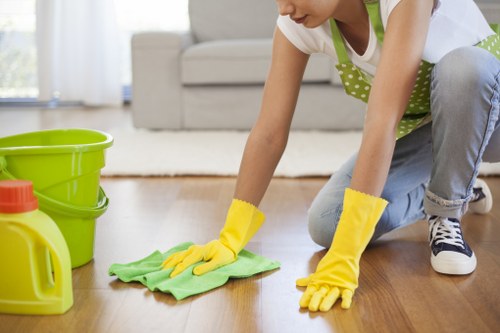
Cleaning materials must be stored, labelled, and used correctly. Never mix chemicals unless the product instructions specifically allow it. Personal protective equipment, including gloves or eye protection where required, must be worn and maintained properly. A cleaner in Marylebone should always check that products are in suitable condition before use and dispose of waste safely once the task is complete.
Floors that are wet, freshly treated, or cluttered must be treated as active hazards. Access routes should be kept as clear as possible, and warning signs should be used when needed. Ladders or step tools should only be used when appropriate and must be stable, inspected, and used correctly. If a method creates unnecessary risk, a safer alternative should be chosen.
Equipment, Hygiene, and Incident Reporting
All cleaning equipment must be kept clean, serviced, and in safe working order. Faulty tools should be removed from use immediately. Electrical equipment must be checked before use, with damaged cables or plugs reported without delay. Equipment should be selected to reduce physical strain where possible, supporting the wellbeing of each Cleaner Marylebone team member.
Good hygiene is essential. Hands should be washed regularly, especially after handling waste, chemicals, or contaminated surfaces. Reusable cloths, mop heads, and tools should be cleaned and replaced as required to avoid spreading dirt or infection. Where there is a risk of contact with bodily fluids or other hazardous materials, extra precautions must be followed in line with the task requirements.
 Any accident, near miss, injury, unsafe condition, or equipment failure must be reported promptly. Reporting allows corrective action to be taken and prevents similar problems from recurring. Records should be kept accurately and reviewed so that trends can be identified and improvements made.
Emergency Action and Continuous Improvement
 In an emergency, the priority is to protect life and reduce harm. Cleaners should know the basic response steps for fire, illness, injury, chemical exposure, and evacuation. If there is immediate danger, work must stop and the area should be made safe if it can be done without risk. Emergency procedures should be simple, understood by all staff, and practiced when necessary.
This policy supports continuous improvement through regular checks, refresher training, and review of incident reports and working methods. Safety expectations may change as tasks, tools, or environments change, so the policy must remain flexible and responsive. The goal is to maintain a professional cleaning service that is both effective and safe.
By following this policy, every Marylebone cleaning assignment can be completed with greater confidence, lower risk, and better protection for everyone involved. Safe working is part of quality service, and every cleaner is expected to contribute to that standard through careful action, awareness, and consistent practice.